Assessment Protocols & Intake Strategy
Transitioning from theory to diagnostics. Learn to assess functional impairment through structured interviews, self-report questionnaires, and performance audits.
Module Overview
While coaches do not diagnose pathology, they must assess functional impairment to tailor their interventions. This module relies heavily on the work of Dawson and Guare to structure the assessment process.
Key Distinction
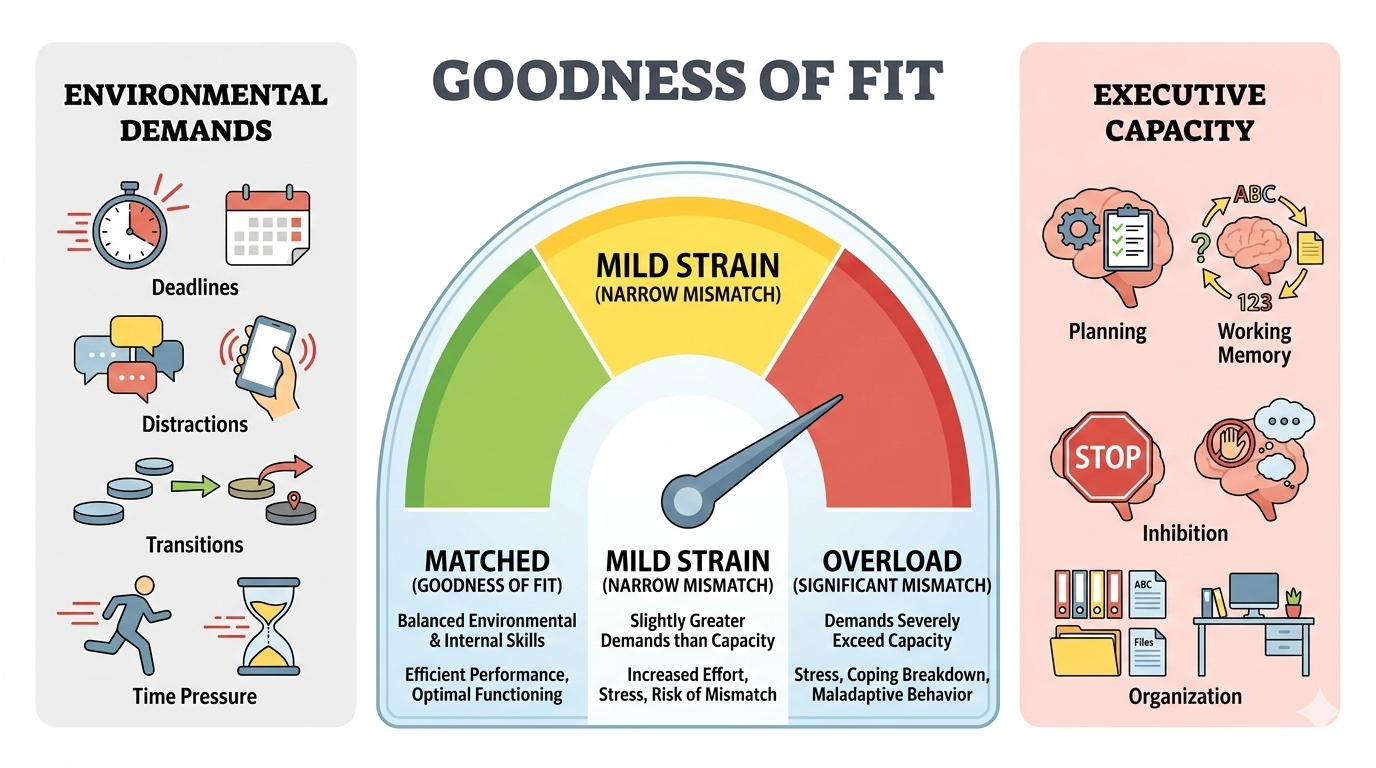
Coaches assess functional impairment, not clinical pathology. The goal is not diagnosis but understanding how the client's executive skills interact with their environmental demands — what Dawson and Guare call the "Goodness of Fit."
The Intake Architecture
The intake session is the most critical hour of the coaching engagement.
Data Gathering
Structured questionnaires to identify the client's history, interests, strengths, and challenge areas. Look for patterns of "strong starts and poor finishes."
Rapport Building
Creating a "shame-free zone" where missed tasks are data points for problem-solving, not moral failings. Establishing the collaborative alliance.
Goodness of Fit
Problems arise when the demands of the environment exceed the client's executive skills. The intake must identify both the skill deficits and the environmental demands.
The "Getting to Know You" Protocol
An effective intake uses a structured questionnaire to probe key areas:
Academic/Career History
Looking for patterns of "strong starts and poor finishes" or specific areas of difficulty that point to underlying EF deficits.
Bio-Regulatory Factors
Sleep, nutrition, and exercise. Research indicates that EF reserves are depleted by fatigue and stress — these must be assessed first.
Islands of Competence
Where does the client succeed? (e.g., video games, sports, art). This reveals that EF is context-dependent, not absent.
The Executive Skills Questionnaire (ESQ-R)
The ESQ-R is the Institute's primary public-facing intake survey. In the current Dawson/Guare manual, it is a 25-item self-report survey summarized into five executive-skill areas derived from the broader executive-skills framework.
Try the Interactive ESQ-RScoring and Interpretation
The ESQ-R reports five skill-area scores plus an overall score. Coaches can then review both the broader pattern and any individual items that stand out as clear strengths or challenge areas.
Strengths-Based Coaching
Always share the strengths first. "You have excellent Flexibility and Stress Tolerance." This reduces defensiveness when discussing weaknesses like "Planning and Organization are your challenge areas."
Discrepancy Analysis
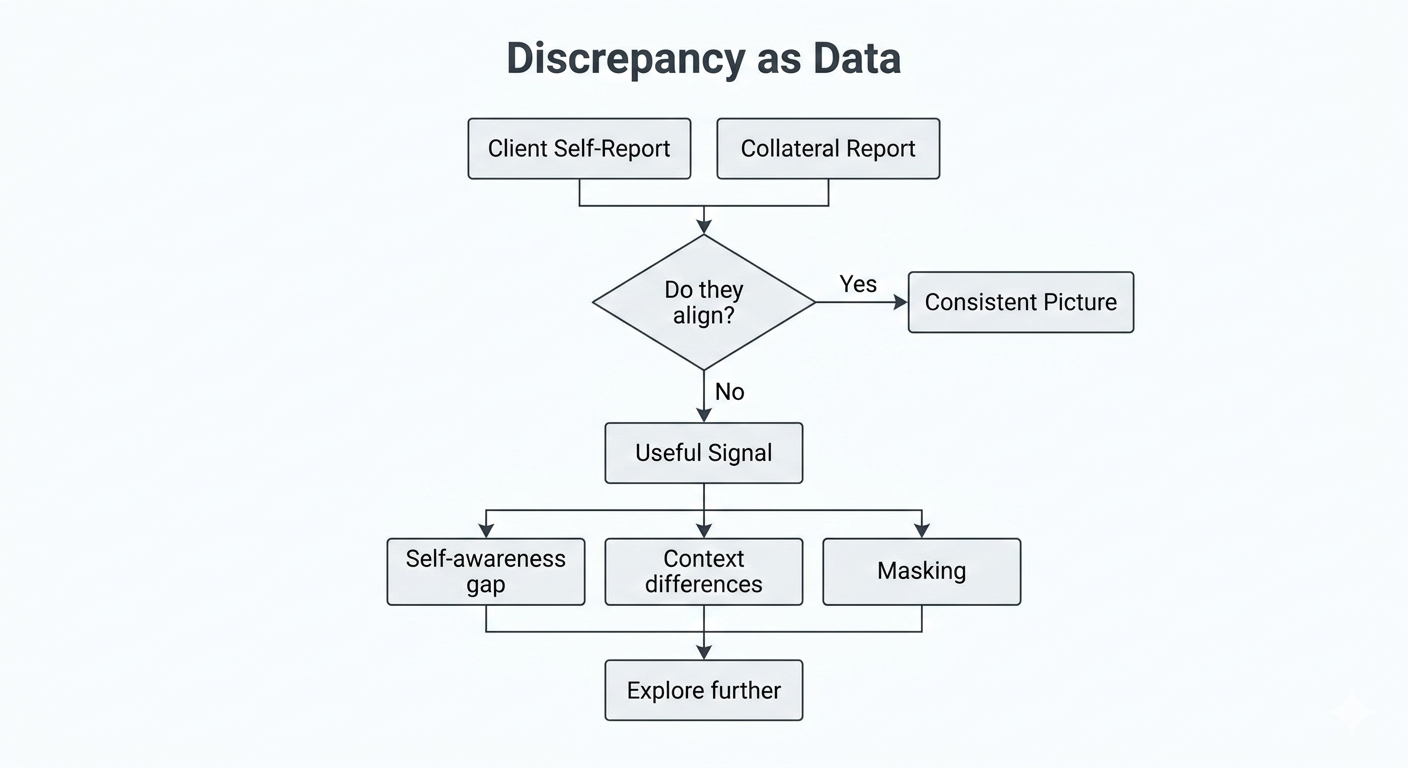
Look for discrepancies between the client's self-report and the report of a parent or teacher. A student might rate their Organization as high because they "know where everything is" in their messy room, while the parent rates it low.
This discrepancy is a coaching opportunity for Metacognition.
Advanced Metrics
BRIEF-2: Coaches can learn the major BRIEF-2 index structure (including BRI, ERI, and CRI) so they can understand reports generated in qualified assessment settings. Elevated scores can help frame areas needing support, but the BRIEF-2 itself remains a proprietary clinical/educational measure.
Brown EF/A Scales: These proprietary scales describe executive-function patterns across age bands and can add useful descriptive language when a qualified professional has already used them. EFI references them as part of the assessment landscape rather than as a free institute tool.
The "Point of Performance" Audit
Following Barkley's guidance, the coach must assess the environment. Questionnaires capture perception, but audits capture reality.
The Digital Audit
Have the client share their screen. Open their LMS (Canvas/Blackboard). How many missing assignments are there? What does their Google Drive look like? Is it one folder titled "Stuff"?
- Review email inbox organization
- Check calendar usage (or lack thereof)
- Examine file naming and folder structure
- Assess notification management
The Physical Audit
If reviewing submitted workspace photos or notes, check for clutter load, visible clocks/timers, and distraction sources before finalizing the intervention plan.
- Workspace organization and clarity
- Presence of analog clock and timers
- Location of "launch pad" for essentials
- Distraction sources and barriers
Assessment Across Real Support Environments
Executive function assessment does not happen only in private coaching. It also shows up in universities, disability offices, academic support centers, and formal accommodations systems.
Higher Education Coaching Models
University programs increasingly use executive function coaching rather than content tutoring alone. The strongest models combine self-assessment, accountability, environmental review, and explicit strategy training.
- Stanford-style neurodiversity coaching without excessive intake barriers
- Appreciative advising that frames students as capable, not deficient
- Academic success coaching centered on time management, planning, and digital organization
- Targeted scaffolds for first-generation and high-support-transition students
Accommodations and Memory Aids
Formal support systems often include memory aids, cue sheets, workflow templates, and testing accommodations. Coaches should understand these supports even when they are not the ones authorizing them.
- Cue sheets that trigger retrieval without giving answers
- Scaffolded task and writing templates
- Digital workspace audits tied to accommodation planning
- Clear referral boundaries when documentation or diagnosis is required
Coaching Implication
A strong assessor does more than identify weak skills. They identify which supports already exist in the client's environment, which supports are missing, and which barriers are structural rather than personal.
Module 2 Assignment
Assignment 2.1: The Intake Simulation
Objective: Practice data gathering and synthesis.
Task:
- Locate a volunteer (friend, colleague, or family member)
- Administer the Executive Skills Questionnaire
- Conduct a 30-minute structured intake interview using "Goodness of Fit" questions
Deliverable: Create a "Client Profile Report" (3–4 pages) that includes:
- Executive Profile: A visual graph of their five ESQ-R skill-area scores
- Narrative Summary: How weak skills impact their specific goals
- Environmental Analysis: Barriers identified during the interview
- Initial Goal Setting: Three SMART goals based on the assessment data
Required Readings & Viewings
- Dawson/Guare Executive Skills Questionnaire (ESQ-R)
- BRIEF-2 Overview — Behavior Rating Inventory of Executive Function
- Brown EF/A Scales Summary Report
- Executive Functioning Coaching Intake Form Templates
- Best Practices in Assessing and Improving Executive Skills (Dawson)
- Stanford Center for Teaching and Learning - Neurodiversity Coaching
- Santa Clara University - Executive Function Coaching
- UCLA - Memory Aids on Exams
- San Francisco State University - Tutoring and Academic Support
Intake Coaching Decision
Work through a realistic intake situation. Your decisions affect what happens next.
Situation: A new client, Jamie, has just completed the ESQ-R self-report. Their scores show significant deficits in Task Initiation and Time Management, but relatively strong Working Memory. During the intake call, Jamie says: "I know exactly what I need to do — I just can't make myself start."
What is your priority as the intake coach?
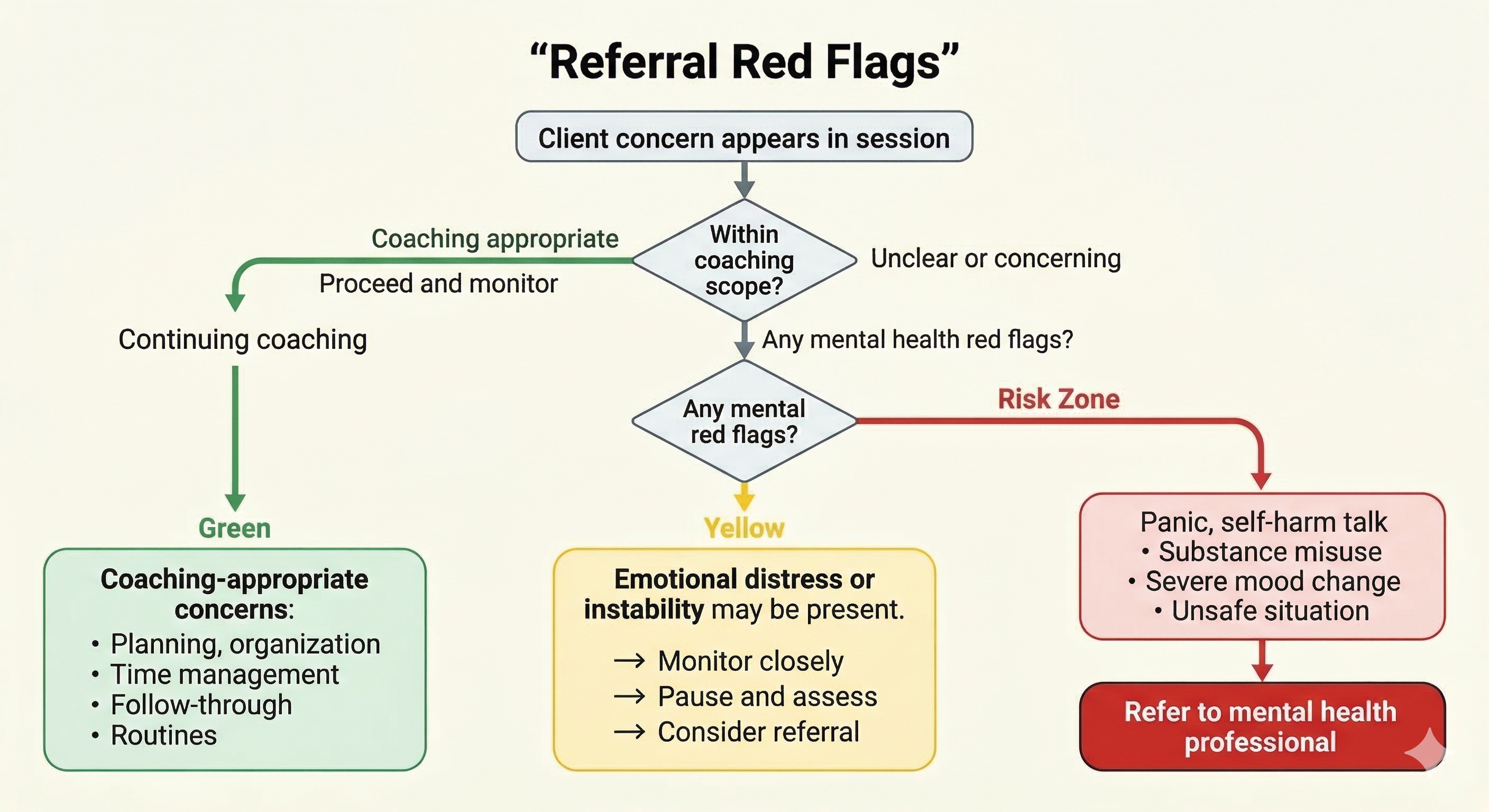
Practice Scenarios
Apply what you learned. Each scenario presents a real assessment or intake decision. Choose your response and see how it holds up against EF coaching principles.
Want Your Intake Protocol Reviewed?
Module 2 teaches assessment and intake strategy. The paid path adds evaluator scoring on your intake simulation, feedback on your functional assessment write-ups, and progress tracking toward certification.
See Assessment Review Options